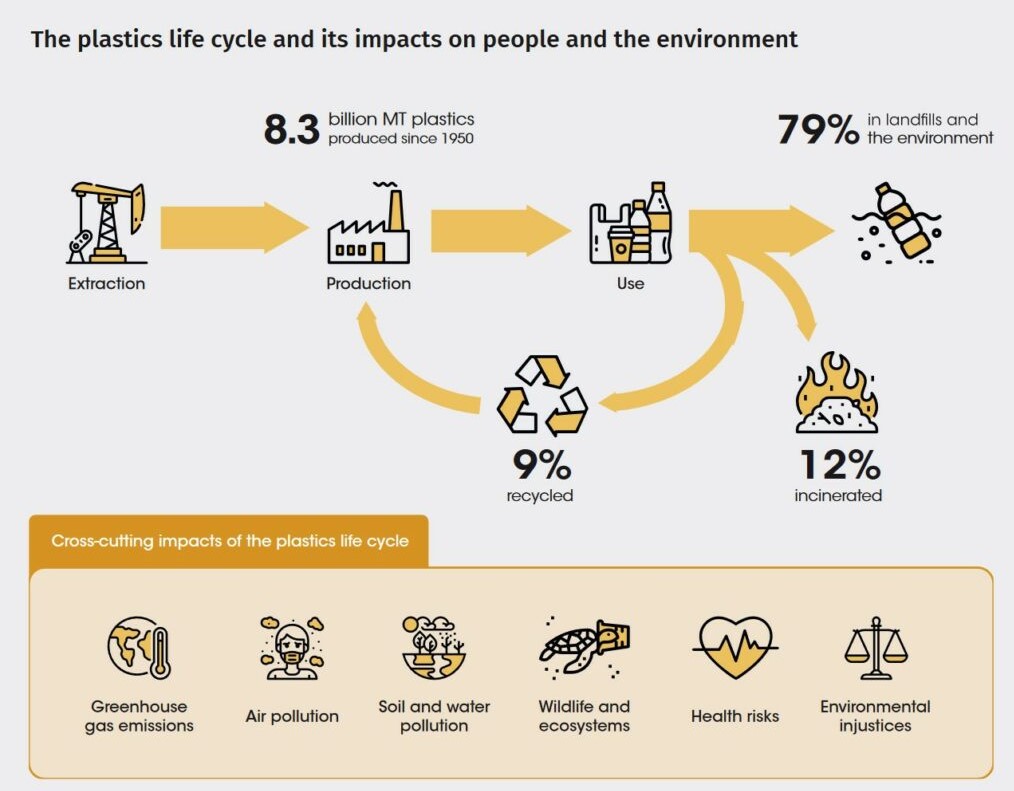
Plastic pollution is a global crisis. Recycling alone cannot solve it because plastics harm the planet at every stage of their life cycle—from production to disposal. The UN calls this the Triple Planetary Crisis: Climate Change, Biodiversity Loss, and Pollution
No plastic is good plastic
We all know that Fossil‑Fuel Plastics are bad but we still use them.
According to the UN, plastics production (from oil and gas extraction through manufacturing) generated an estimated 1.8 billion tonnes of CO₂-equivalent in 2019, accounting for about 3–5% of global emissions. Ninety-eight percent of single-use plastics are derived from petrochemicals. Extraction, production, and pollution degrade soil, poison groundwater, and disrupt ecosystems on land and in oceans, threatening biodiversity globally. Around 22% of plastic waste escapes into the environment, with at least 14 million tonnes entering oceans annually, where it endangers wildlife through ingestion and entanglement, impacting entire food webs.
We thought we were given a free get out of jail card with biodegradable plastics:
According to studies published on Nature.com though sourced from renewable resources, bio-based and biodegradable plastics often require intensive land use. Studies indicate increased cropland (up 22%), intensified land use (up 35%), and added deforestation (up 20%) by 2040—shifting environmental harm from fossil extraction to land impact. Their degradation in natural settings can also release significant greenhouse gases, sometimes exceeding those from conventional recycling or disposal. Intensive agriculture for feedstocks leads to habitat loss, pesticide runoff, soil degradation, and water pollution. Bio‑based microplastics—such as PLA, PHB, and PBAT—have been shown to harm plant growth, soil organisms, and aquatic life by disrupting nutrient cycles, causing developmental issues, oxidative stress, and reproductive harm. Even biodegradable plastics can fragment into micro- and nanoplastics if not fully degraded. These particles persist, leaching toxins and entering food chains, posing ecological and human health risks.
Recycling plastic is to downcycle plastic and creating microplastics
Downcycling
Globally, only about 9–10% of plastic used in new products comes from recycled material. Each time plastic is mechanically recycled, its polymer chains break down, reducing strength and quality. This degradation means recycled plastic often cannot serve the same purpose as virgin material—a process known as “downcycling.” For example, when a bottle claims it’s “made from recycled plastic,” it usually contains only a portion of post-consumer recycled (PCR) plastic, with the rest being virgin plastic. Most PET beverage bottles fall in the 25–50% recycled range, while a few premium brands achieve 100% recycled PET, though this is rare and typically limited to clear bottles.
Microplastics
Recycling also creates microplastics. During shredding and grinding, tiny fragments break off—less than 5 mm in size—and can escape into wastewater, eventually reaching rivers and oceans. Heat and mechanical stress during recycling weaken polymer chains, making the material brittle and prone to shedding even more microplastic particles during later use. Fabrics made from recycled polyester also release microplastic fibers in washing machines. These particles often absorb toxic chemicals and enter soil, waterways, and the food chain, posing risks to human and animal health. Ironically, recycling can contribute to the same pollution it aims to reduce.
Where is the majority of plastic use coming from?
Packaging (≈40% of global plastic use)
Single-use items like bottles, wrappers, bags, and containers dominate.
Textiles (≈15%)
Synthetic fibers like polyester, nylon, and acrylic used in clothing, carpets, and furnishings.
Consumer Products (≈12%)
Household goods, toys, electronics casings, and kitchenware.
Construction (≈16%)
Pipes, insulation, flooring, and window frames.
Automotive & Industrial (≈7%)
Car parts, machinery components, and safety equipment.
What can you do:
Reduce food that comes in packaging by buying at veggie markets, using refilleries, buying in bulk and making things from scratch.
Buy secondhand clothing or buy 100% linen, wool, organic cotton or bamboo.
Looking at simple swaps like a plastic brush for a wooden one or plastic containers to glass ones.
- More local ideas to come for this one.
Creating real and long-lasting change
Global Plastics Treaty: A strong international agreement is needed to cut plastic production and pollution.
Current treaties (like Basel and Stockholm) don’t go far enough.
The treaty should:
1.Reduce plastic production.
2.Limit hazardous chemicals.
3.Align with climate and biodiversity goals.
 ENM on Facebook